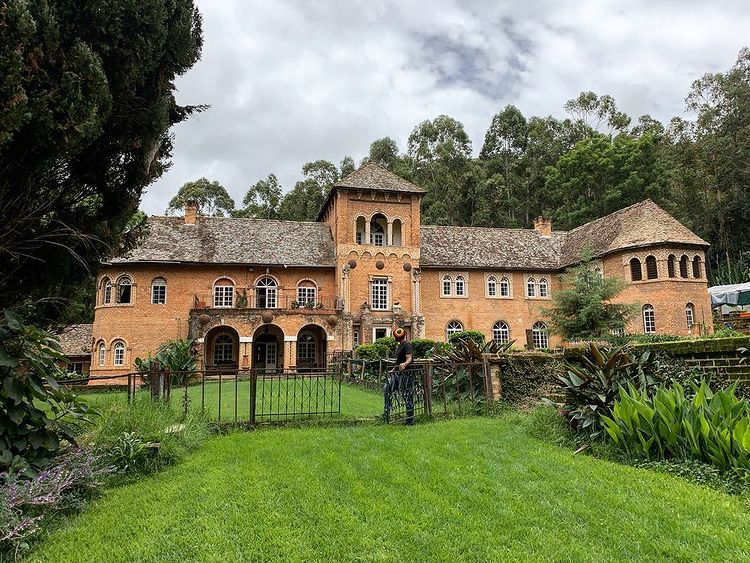
Tucked deep in the emerald folds of Zambia’s Muchinga Province is a baronial red-brick manor, draped in climbing plants, that quietly adds its hum to our country’s history. Mornings find it wrapped in an enchanting rather than eerie mist, and coming upon it evokes the feeling that you have accidentally wandered into a colonial-era novel where everyone still takes tea on the verandas at 16:00.
This place is Shiwa Ng’andu. It does not invite you to visit; it lures you in with the promise of the magic of a bygone era that is worth the journey, whether you are an adventurer, someone fond of ecotourism and scenic drives, or simply a lover of art and a good dose of history.
DAY ONE: ON THE ROAD
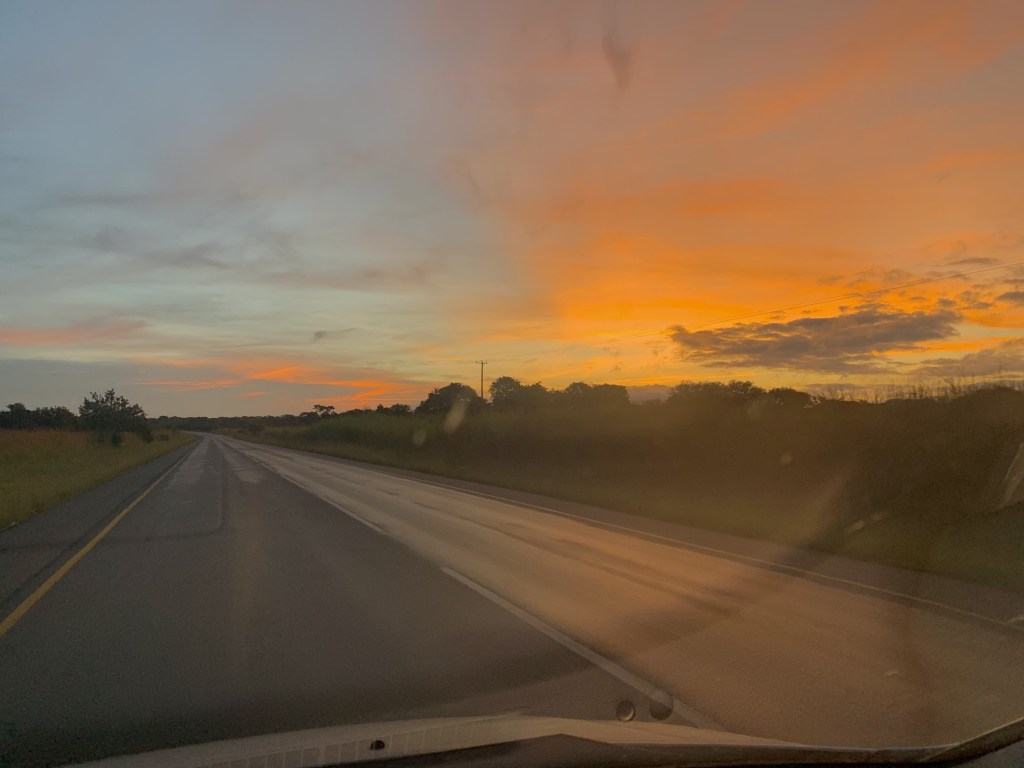
05:36 At the brink of dawn, I ease into my sedan for an 11-hour drive from Lusaka to Mpika along the familiar Lusaka–Kapiri Mposhi route. I have a good playlist going and am looking forward to the hot shower that awaits me at the end of the road.
09:30 I stop for a quick bathroom break and a bite at the Fig Tree in Kabwe, then refuel in Kapiri Mposhi before continuing towards Serenje District, in the northern part of Central Province.
13:02 I leave Serenje’s last stretch of good tarred road en route to Mpika in Muchinga Province. I know the road after Serenje is bad, but I am not prepared for what I am about to plunge into. Thank goodness I already have a good playlist going because one definitely needs a positive attitude when dealing with this road. I tell myself to ‘count it all joy’ because it is all in the name of adventure.
This 238 km gauntlet has a silver lining, though: the shifting landscape, jutting rock formations and hilly terrain absent from Zambia’s southern reaches. Note to self: Next time, when I have more time on my hands, I will make a detour to one of Zambia’s more scenic waterfalls, Kundalila Falls. My last adventure there was thrilling and definitely worth the added time.
19:16 Thankfully, I arrive in Mpika in one piece, with no immediate damage to the vehicle and just in time for dinner, a hot, refreshing shower and some much-needed rest at Landmark Lodge. I think I will take it easy tomorrow, as the estate is only about 100 km from here.
DAY TWO: A NECESSARY DETOUR
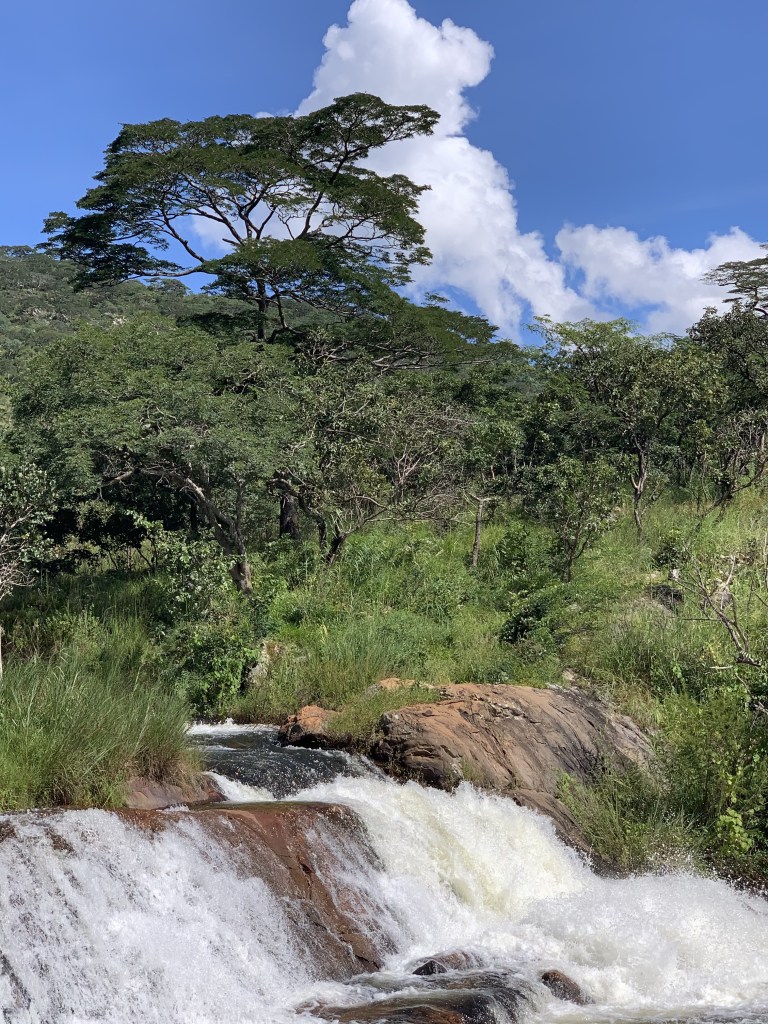
08:32 After a leisurely breakfast at the leafy Bayama’s Lodge, I top up on fuel and head back onto the road for the final leg of my journey from Mpika to Shiwa Ng’andu. The Mpika–Chinsali road is in much better shape than yesterday’s Serenje–Mpika stretch. I did not make the detour to Kundalila Falls on my way into Mpika yesterday, so I decide to visit Chinsonkolo Falls, also known as Lwitikila Falls, instead. It is only 15 km outside Mpika, just off the highway.
09:12 The road is surprisingly good and easily passable, even in my sedan. The drive from Mpika to Lwitikila Girls’ Secondary School, the closest landmark to the entrance to the falls, takes only 20 minutes. Chinsonkolo Falls is one of Zambia’s smaller waterfalls, but it offers a simple serenity, thanks to the surrounding green woodland, its butterfly-filled banks and a nearby church that provides much-needed shade.
DAY TWO: ARRIVAL
11:28 Later that morning, I arrive in Shiwang’andu District. After turning off the highway, the scenery shifts almost theatrically. My approach is marked by a long, tree-lined avenue, as though it were ushering me towards something extraordinary. It feels ceremonial, like a rite of passage leading to one of the country’s most intriguing historical landmarks.
I wander down a path away from the parking area, beneath a towering canopy of trees that creates a natural cathedral, filtering soft sunlight onto the grass below. The mid-morning breeze is alive with birdsong. It feels as though they are welcoming this lone adventurer to a place he did not know he had been missing.
At the end of the path waits a weathered metal gate, intricately crafted in the style of a bygone era. Beside it is a small hand-drawn map that makes a good attempt at capturing the scale of the estate.
INSIDE AFRICA HOUSE
Shiwa Ng’andu Manor was built by Sir Stewart Gore-Browne, a British officer who first encountered the region while serving on the Anglo-Belgian Boundary Commission, which surveyed the boundary between Northern Rhodesia and the Belgian Congo. I learn that he was an adventurer who chose to settle in the area after being captivated by the countryside and nearby Lake Ishiba Ng’andu, the ‘Lake of the Royal Crocodile’.
The three-storey manor took shape in stages from the early 1920s, with further sections and the chapel added as the estate grew. The manor is also referred to as Africa House, and its design reflects Sir Stewart’s British roots. It still stands today, more than a century after construction began, as part of his lasting legacy and a piece of Zambia’s history.
The deeper I go into the story of Shiwa Ng’andu, the more complicated it becomes. Gore-Browne was a British colonial settler who built an English manor in Northern Rhodesia, but he would later support African political advancement and Zambia’s journey towards majority rule. It is this contradiction that makes Africa House more than a beautiful relic of the past.
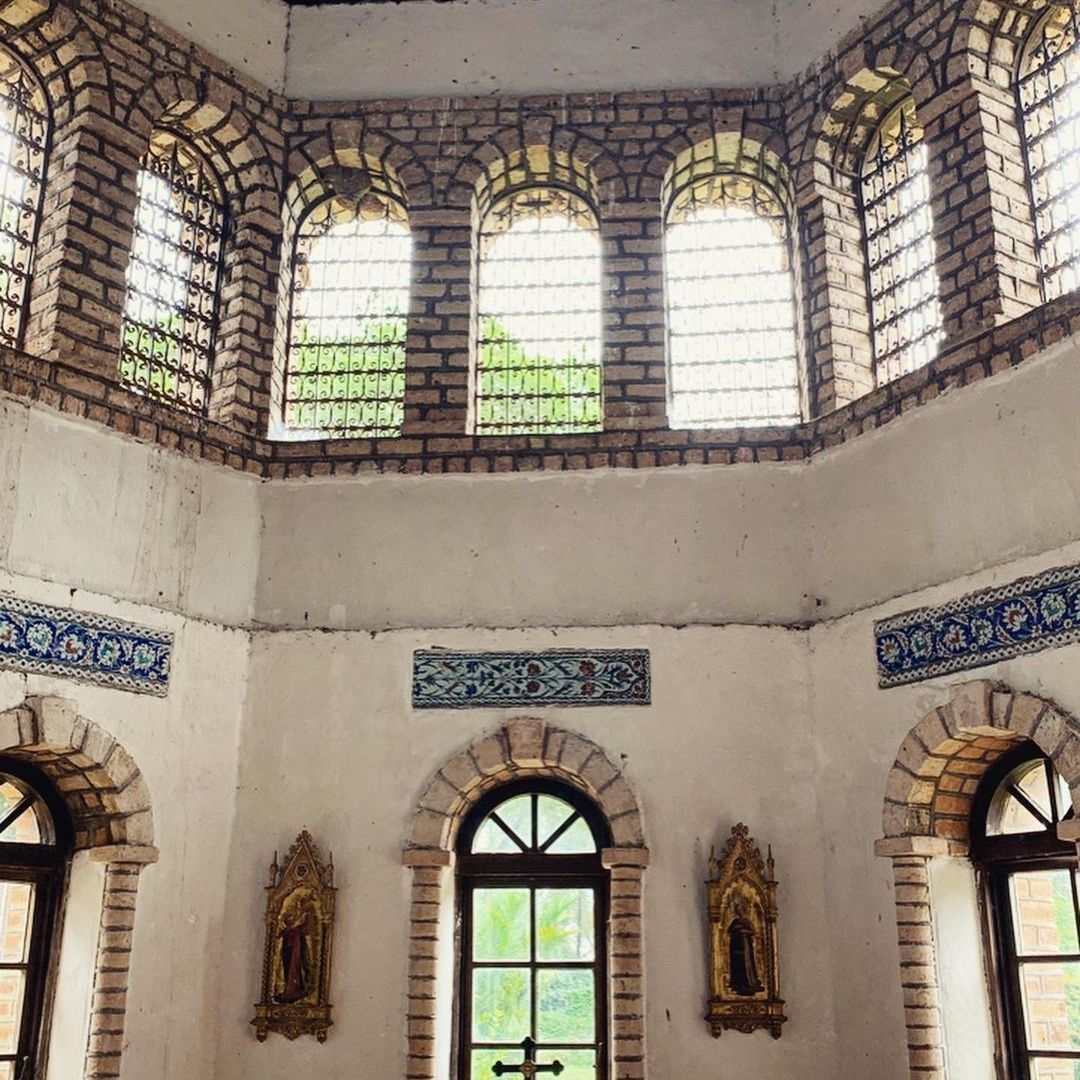
I begin my tour of the manor at the chapel, a modest but intimate space that seats about 30 people and contains original artefacts used by the chaplain during services for Sir Stewart and his family. I am delighted to learn that the chapel still hosts Sunday services for estate staff.
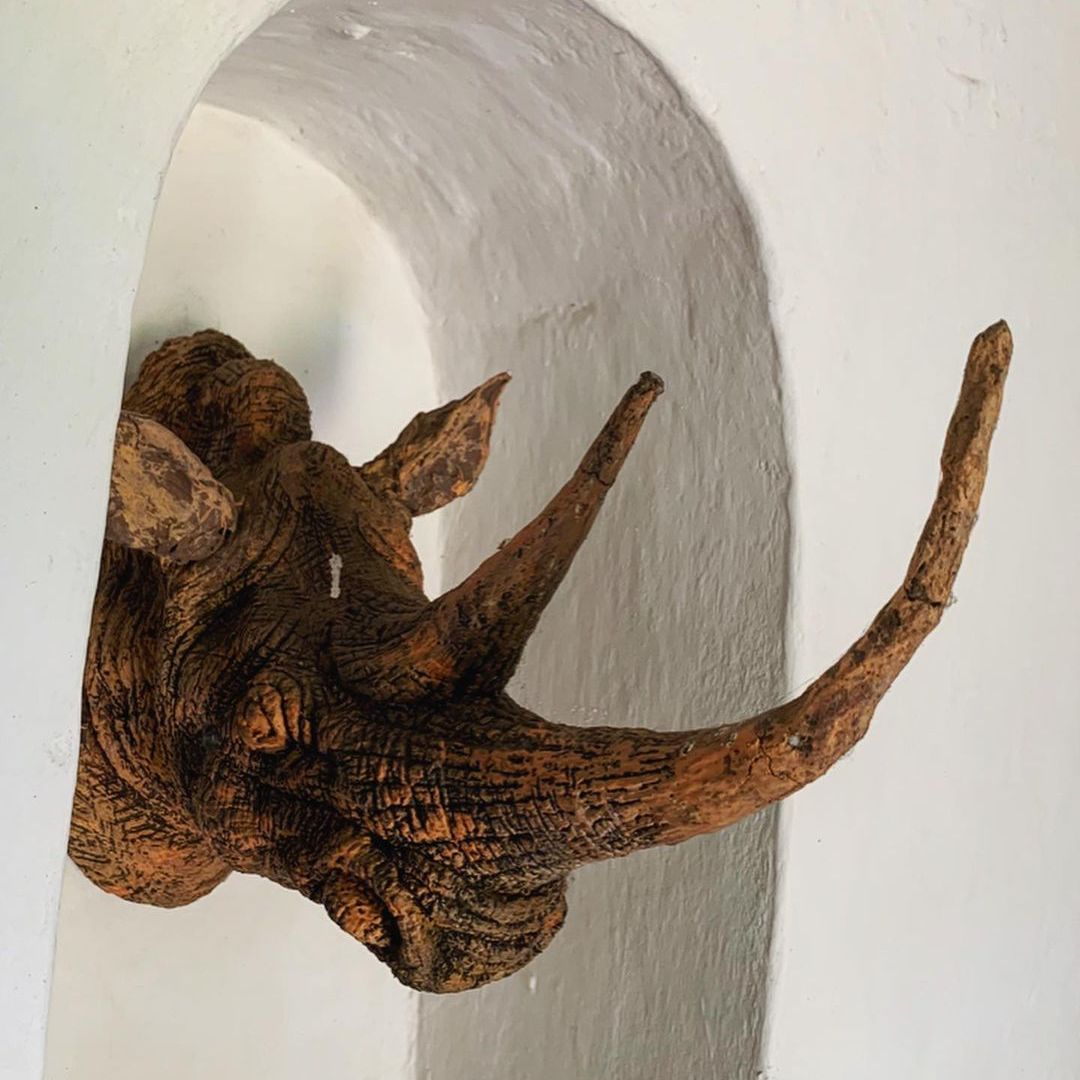
Leaving the chapel and stepping through the manor’s main entrance, I am greeted by an artist’s impression of a rhino, an unmistakable nod to Sir Stewart’s nickname, Chipembele, the Bemba word for rhinoceros. According to one account, the name was first given to him after he shot a rhinoceros at Shiwa, though it later came to be associated with his fiery temperament. Mounted antelope heads and other hunting trophies from Sir Stewart’s expeditions across the region adorn the walls.
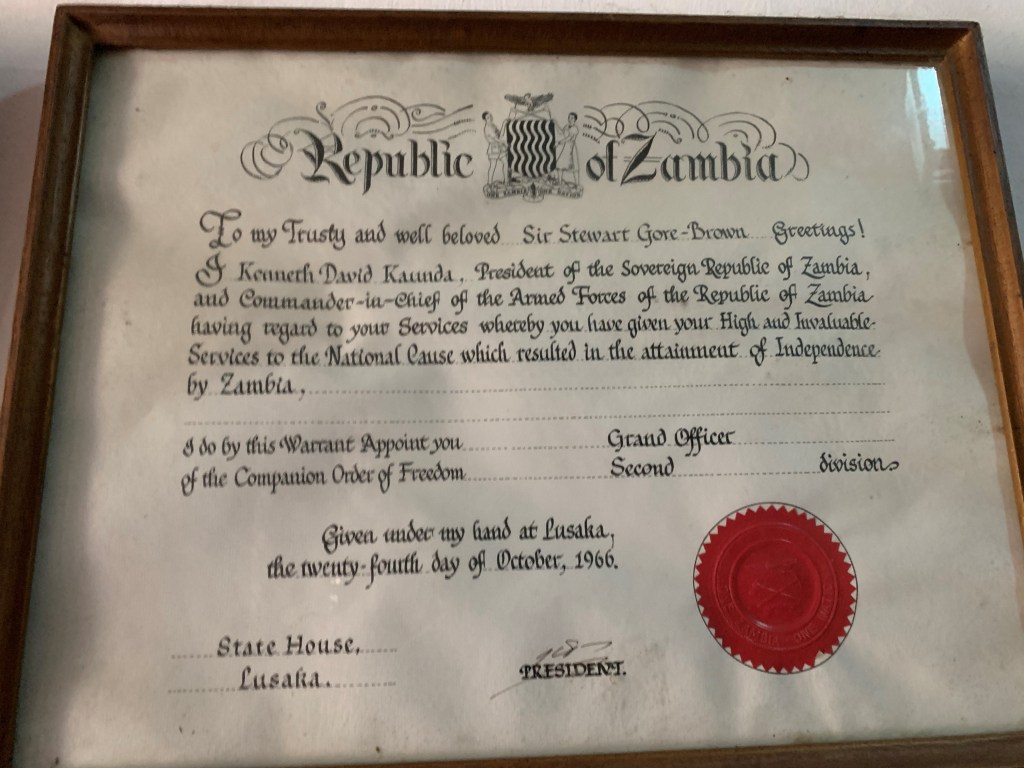
The walls of the manor’s inner rooms are lined with photographs and artworks depicting Sir Stewart’s family, friends and notable figures, including Zambia’s first president, Dr Kenneth Kaunda. I learn that the two were close and that Sir Stewart supported Zambia’s transition to independence. Kaunda appointed him a Grand Officer of the Companion of the Order of Freedom, Second Division, in 1966, and Gore-Browne was accorded a state funeral after his death in 1967, making him the first white man in Zambia’s history to have received one. The manor also commemorates the coronation of Queen Elizabeth II. Look out for the plaque beneath the large tree in the courtyard beyond the foyer.
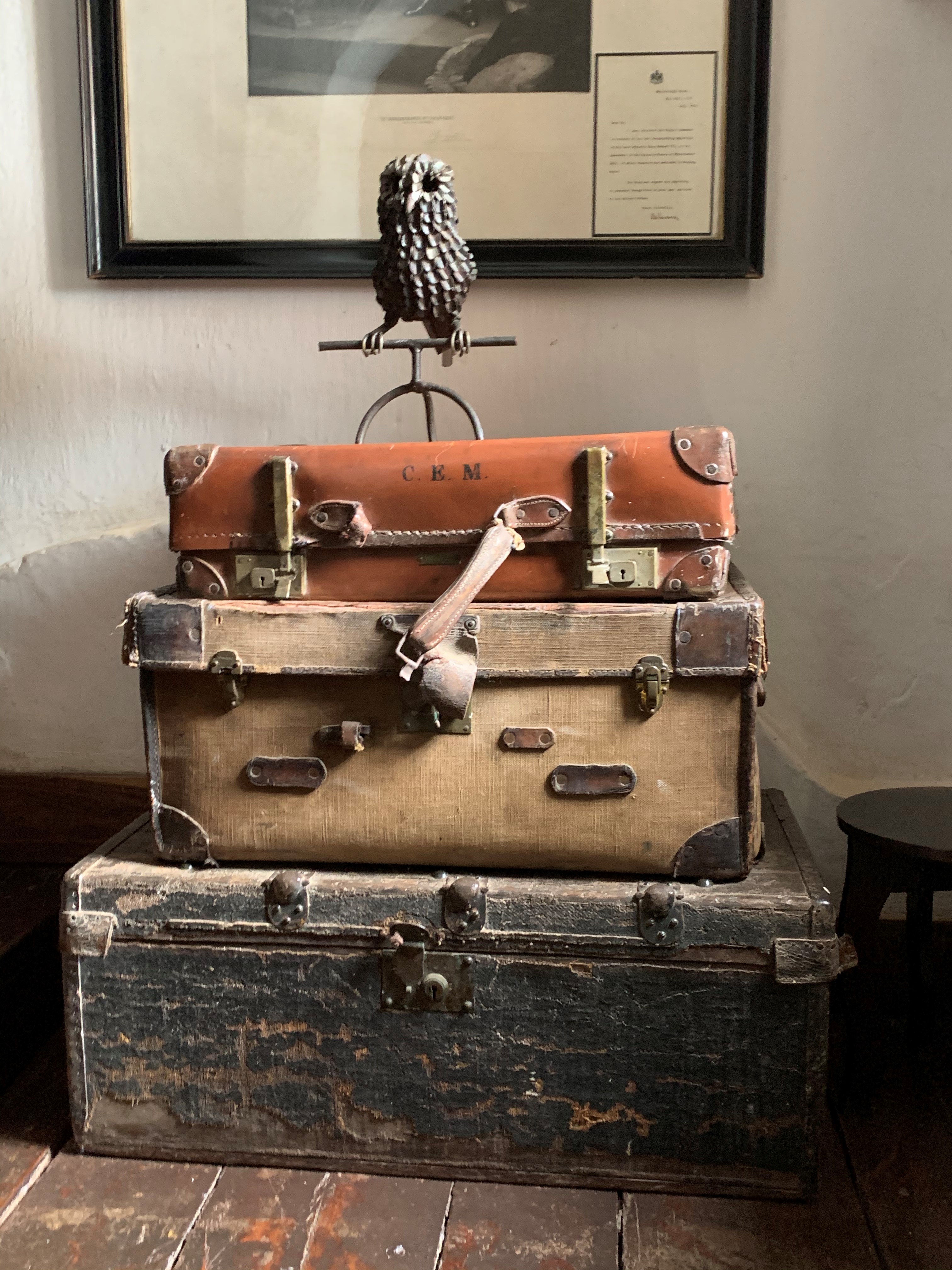
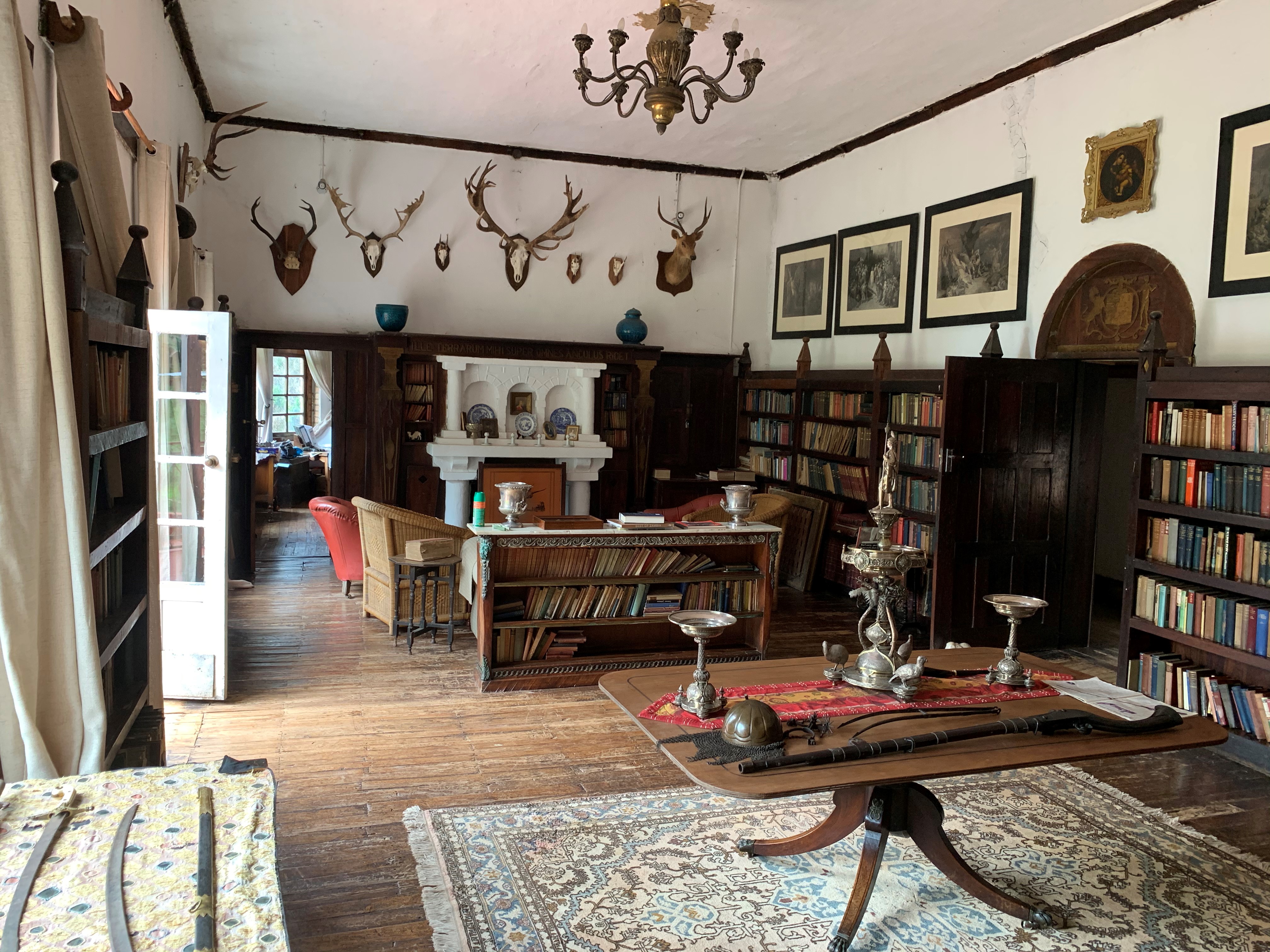
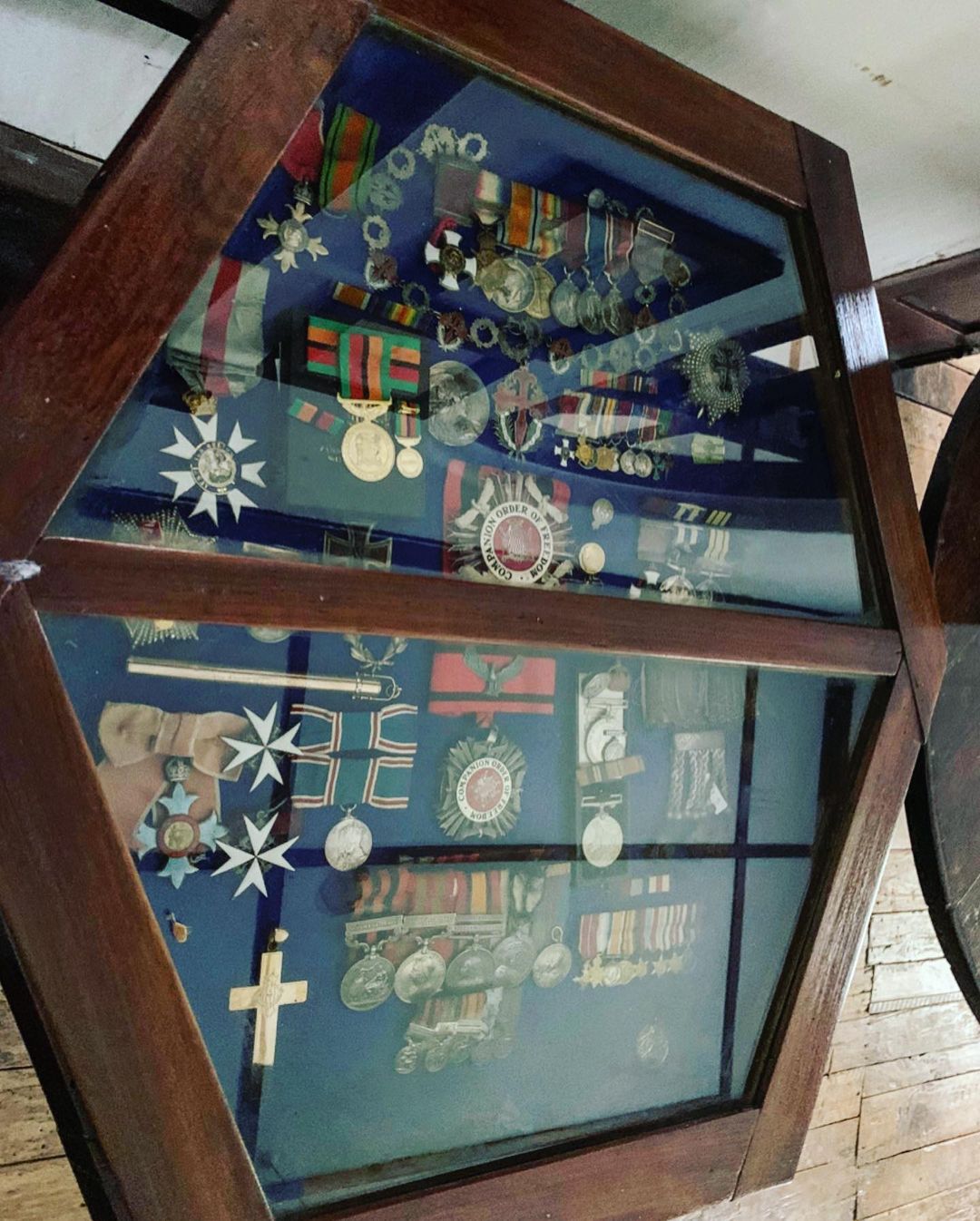
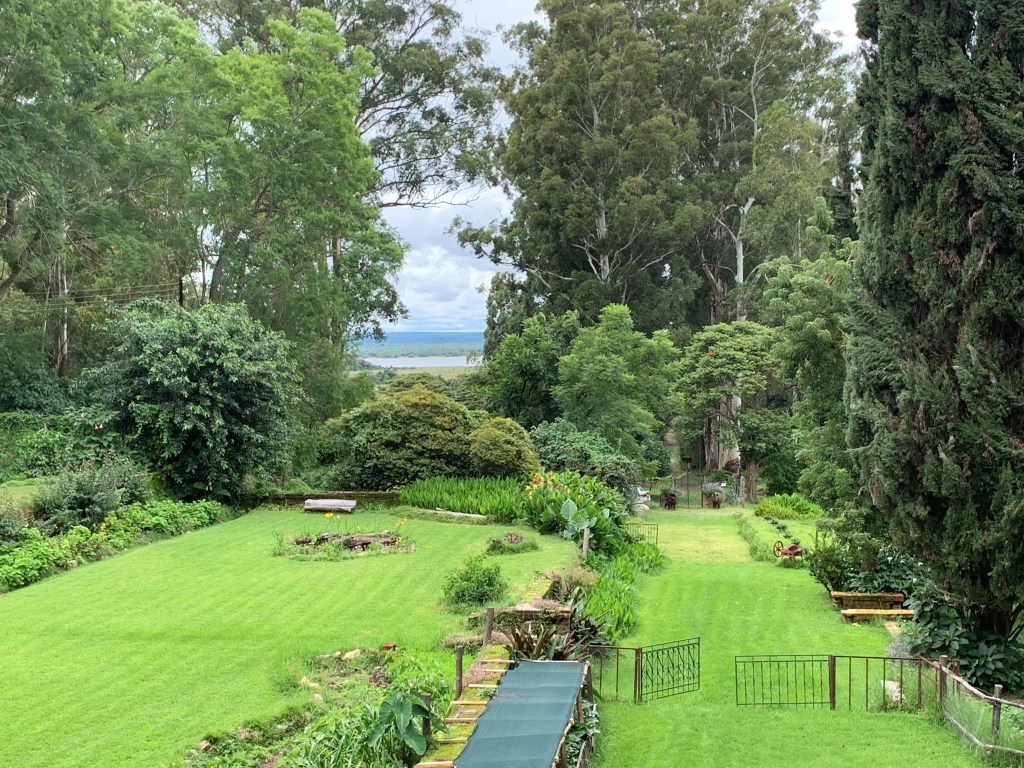
At the top of the staircase on the next floor, I discover a set of luggage with an owl on top of it, almost like an unlikely welcome party ushering visitors into the section of the manor that contains paintings from various parts of the world, books, fabrics and artefacts collected during Sir Stewart’s travels. Most memorable is the library, home to several hundred books, some over a century old, along with treasures such as a silver centrepiece from Australia and a collection of Sir Stewart’s swords, honours and medals. From the library balconies, I have sweeping views of the manicured lawns and distant Lake Ishiba Ng’andu. The lake immediately becomes a tempting next stop.
13:30 While the manor is the crown jewel, the surrounding estate offers adventures of its own. I take a guided walk around the grounds but opt out of a hike along the forest trail, where birdlife and small wildlife are common in the early mornings. I also learn that Lake Ishiba Ng’andu offers beautiful spots for photography, picnics and quiet reflection. Tempting as it is, I decide to skip it this time so I can fully savour Africa House and its gardens before my trip ends.
18:47 I reluctantly pull away from the manor and inch my way back to the Mpika–Chinsali road, determined to chase the last of the golden light across the wide-open horizons and rolling hills before it disappears.
Back in Mpika, I end the adventure with a well-earned, piping-hot five-finger meal of nshima. There is nothing like hot nshima and ndiyo after a day of adventuring. The journey to experience Zambia’s living history has been well worth it; I have enough memories and reflections to carry me comfortably through the long drive back to Lusaka the following day.
Quick Tips
- Book accommodation before travelling to Shiwa Ng’andu.
- Contact the estate in advance to confirm tour days, times, current fees and accepted payment methods.
- Carry your own snacks, as food options near the estate are limited.
- Wear comfortable shoes; some paths around the estate are uneven.



Leave a Reply